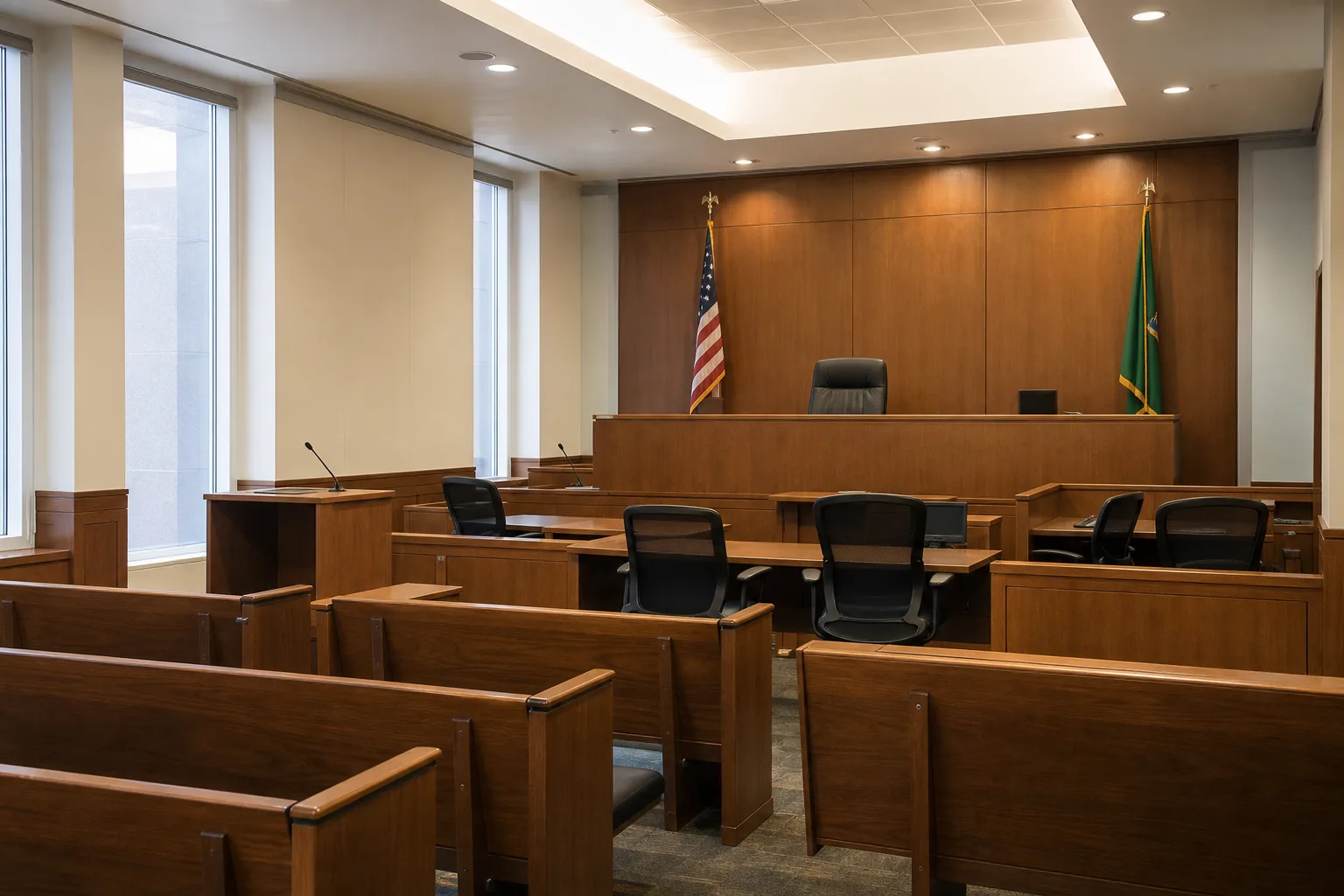
The lawyer who walks into a King County District Court arraignment calendar with fourteen files under one arm may be the same person who, on a different day, would have charged a flat fee to handle one of them. Assigned counsel in Washington is not a separate professional class. It is a contract, a staffing model, and a screening process, and the differences that matter to a first-time impaired driving defendant sit in those three things rather than in the competence of the attorney standing next to them. A careful reader checks the mechanism, not the label.
How screening actually works, and what it asks about
Eligibility for appointed counsel turns on a financial screening conducted after the court advises a defendant of the right to counsel, usually at or immediately before the first appearance. In King County District Court and in Seattle Municipal Court, a screener collects income, household size, dependents, liquid assets, and fixed obligations, and the answer is a determination of indigency rather than a judgment about whether the fee would hurt. Washington law also recognizes a middle category, indigent and able to contribute, which can produce appointed counsel with a repayment obligation attached. The screening is done under penalty of perjury, and it can be revisited later if circumstances change in either direction.
Two practical points get missed. Vehicle equity, a retirement account, and a spouse's income can all enter the calculation depending on how the form is read, so a defendant who assumes disqualification without asking has often guessed wrong. And a person released at arraignment with instructions to apply is not represented until the application is processed, which means the interval between release and appointment is time nobody is watching the calendar.
What a caseload does to a case
Washington has, uniquely among the states, court-adopted standards for public defense that cap the annual case counts a single attorney may carry, with misdemeanors weighted differently from felonies and DUI cases carrying their own treatment. The standards exist because the alternative is invisible triage. What a cap does not do is create time; it distributes attention, and distribution shows up in specific, observable ways. Return calls take days rather than hours. Discovery review happens close to the hearing rather than the week the case opens. Motion practice concentrates on the issues most likely to move the case, which is usually the correct instinct anyway.
The U.S. Department of Justice maintains a longstanding interest in the adequacy of indigent defense systems nationally, and the framing it uses is worth borrowing: the question is capacity, not caliber. A defender who has tried thirty impaired driving cases in a year knows the breath test protocols, the local prosecutors, and the deputies' testimonial habits better than a general practitioner who takes two such cases a year at private rates.
Where paying changes what gets done
There are narrow circumstances in which private counsel materially alters the work product, and they are worth naming precisely. The first is the Department of Licensing hearing, which is a separate administrative proceeding with its own deadline and is generally outside the scope of appointed counsel in a criminal case; a defendant who wants that hearing contested by an attorney is usually paying for it either way. The second is expert work, where a private budget can retain a toxicologist or a breath test consultant without a motion to the court, though appointed counsel can seek funds for the same purpose. The third is scheduling flexibility for someone whose employment or immigration exposure makes continuances and calendar timing consequential.
The fourth is simply access. Paying buys the ability to call and be called back, to sit down for an hour before a plea decision, and to have the same person present at every setting rather than a covering attorney at a status conference.
What a careful reader checks
Ask the screener what happens if the application is denied and whether a redetermination is available. Ask appointed counsel how many DUI cases they are carrying and whether they will be the attorney at trial. Ask a private attorney, in writing, whether the license hearing, any expert retention, and post-conviction compliance work are inside the quoted fee or billed separately. Compare the answers side by side. In a good number of first-charge cases, the two paths converge on the same negotiation with the same prosecutor and the same range of resolutions, and knowing that is worth more than choosing on instinct.